

Installing a pool transforms an ordinary backyard into a personal retreat, but the process involves far more than digging a hole and adding water. From choosing the right materials to navigating safety regulations, understanding each stage helps homeowners make smarter, better-informed decisions.
Choosing the Right Pool Type for Your Backyard
One of the first decisions homeowners face is selecting which type of inground pool best suits their property, budget, and long-term goals. The three primary options — concrete (also called gunite), vinyl liner, and fiberglass — each carry distinct advantages and trade-offs in terms of cost, durability, and installation timelines.
Concrete pools sit at the premium end of the market. Installation and materials can range broadly, with concrete or gunite options running anywhere from $35,000 to $120,000 depending on size and design complexity — but these pools can last between 50 and 100 years, making them a long-term investment (source). Vinyl liner pools tend to cost significantly less, typically falling between $20,000 and $40,000, though their liners have a lifespan of roughly a decade before replacement becomes necessary (source).
Fiberglass pools occupy a middle ground that many homeowners find appealing. The shells arrive pre-manufactured and are lifted into place by a crane, allowing for a dramatically faster installation compared to concrete alternatives (source). In fact, the fiberglass installation process is efficient enough that a backyard can go from empty to a fully finished swimming pool within days (source).
What the Installation Process Actually Involves
Regardless of pool type, installation follows a structured sequence that begins well before any excavation starts. Permits must be obtained, site assessments completed, and local codes reviewed — all before a single shovel hits the ground. Permit fees alone can range from $100 to $1,800, depending on the municipality and the scope of the project (source).
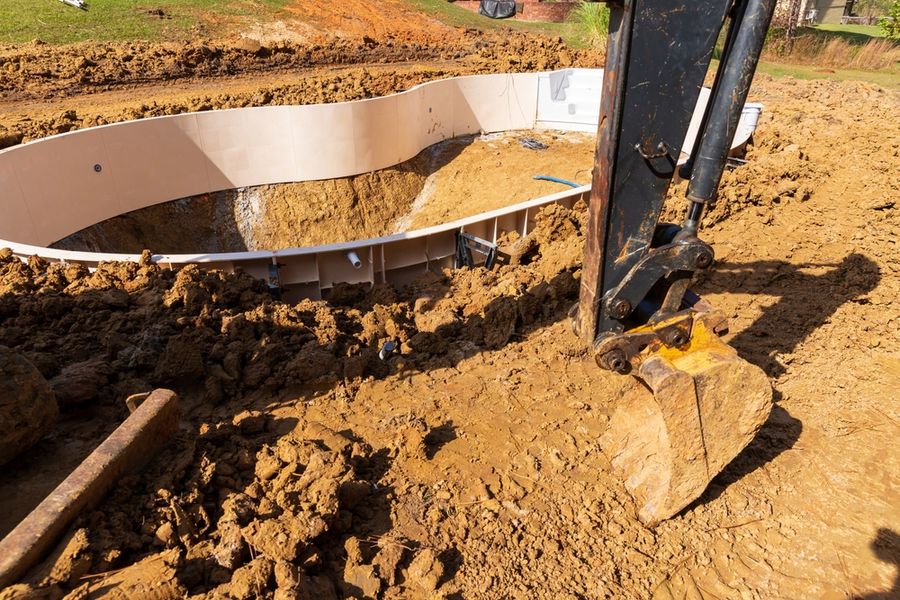
For fiberglass installations, the process begins with excavating a hole shaped precisely to match the pool shell's dimensions. A carefully graded gravel floor is then prepared to provide a stable, level foundation. Once the shell is craned into position, plumbing lines are run, and the pool begins filling with water simultaneously as crews backfill around the exterior walls — a deliberate technique that maintains equal pressure on both sides of the shell and prevents structural warping (source).
After the backfilling phase, reinforcing rebar is fastened to the pool's perimeter, and concrete is poured about eight inches thick around the outer edge, forming what is known as the bond beam — a structural anchor that locks the pool securely in place (source). Decking is then installed around the finished shell, completing the transformation of raw excavation into a usable swimming environment.
Understanding the Full Cost of Pool Installation
Sticker prices rarely tell the full story when it comes to pool installation. While the national average for an inground pool sits around $66,000, the actual cost of materials alone can range from $14,000 on the modest end to well over $135,000 for larger or more elaborate builds (source). Even at the absolute minimum, installation and materials together typically start at around $25,000 (source).
Beyond construction, homeowners should account for a range of additional expenses that commonly accompany a new pool. Safety fencing, which many local codes legally require, can add between $1,500 and $10,000 to the total project cost (source). Pool covers vary widely in price as well, spanning from as little as $75 for basic covers to $22,000 for high-end automated systems (source). Ongoing expenses such as utilities, maintenance, and insurance adjustments add further to the lifetime cost of pool ownership and deserve serious consideration before breaking ground.
Safety Standards Every Pool Owner Must Know
Pool safety is one of the most critical dimensions of any installation project, and regulators take it seriously. The U.S. Consumer Product Safety Commission reports that approximately 280 children under the age of five drown in pools annually across the country, with an additional 2,200 treated in emergency rooms for submersion-related incidents — the majority of which involve residential pools (source).
The CPSC actively participates in developing safety standards through the ASTM F15.49 Pool Safety Standards Subcommittee, working to establish requirements that reduce these tragic outcomes (source). One area receiving particular regulatory attention involves entrapment hazards linked to pool and spa circulation systems — incidents that the CPSC has documented as causes of both injury and death (source). Properly designed drain covers, compliant circulation systems, and appropriate barriers are all essential elements of a safe residential pool installation.
The agency is also working to produce comprehensive safety guidelines that give consumers, local legislators, and code developers a unified reference for the latest standards and technologies (source). For homeowners, staying informed about these evolving standards — and ensuring their contractors follow them — is not optional. It is a fundamental responsibility that comes with pool ownership.
Practical Considerations Before Breaking Ground
Before committing to a pool installation project, homeowners benefit from taking stock of several practical factors. Soil conditions affect excavation difficulty and can influence which pool type is best suited to a given property. Utility lines running through the yard must be identified and avoided. Local zoning rules may restrict pool placement relative to property lines, structures, or easements.
Hiring a reputable, licensed contractor is equally important. Because pool installation involves excavation, plumbing, electrical work, and concrete, it draws on multiple skilled trades simultaneously. A qualified contractor coordinates these moving parts, pulls the necessary permits, and ensures the finished pool meets both structural and safety code requirements. Homeowners who skip proper vetting of contractors risk costly rework or installations that fail inspections entirely.
Timing also plays a role in the overall experience. In most U.S. regions, contractors face peak demand in spring and early summer, which can extend project timelines and inflate pricing. Scheduling installations during off-peak seasons — fall and winter in many areas — can sometimes result in faster project starts and more competitive quotes.
Why You Should Learn More About Pool Installation
Pool installation is a substantial undertaking that rewards those who approach it with thorough preparation. Material selection shapes both upfront costs and long-term durability, with options ranging from multi-decade concrete structures to faster-install fiberglass shells. Installation itself is a multi-phase process involving excavation, structural reinforcement, plumbing, and finishing work — all governed by local codes and national safety standards.
Beyond the build itself, ongoing costs and safety obligations mean that pool ownership is a commitment that extends well beyond the day construction wraps up. Homeowners who take the time to research materials, understand safety requirements, and vet qualified contractors position themselves to enjoy their investment safely for years to come.